NeuroSalt Reviews: What This Herbal Nerve Comfort Capsule Contains and What to Realistically Expect
By the Plant Vital Editorial Team · Updated October 2026
Disclosure: this article contains affiliate links. If you buy through them, we may earn a commission at no extra cost to you. It does not change what we write.
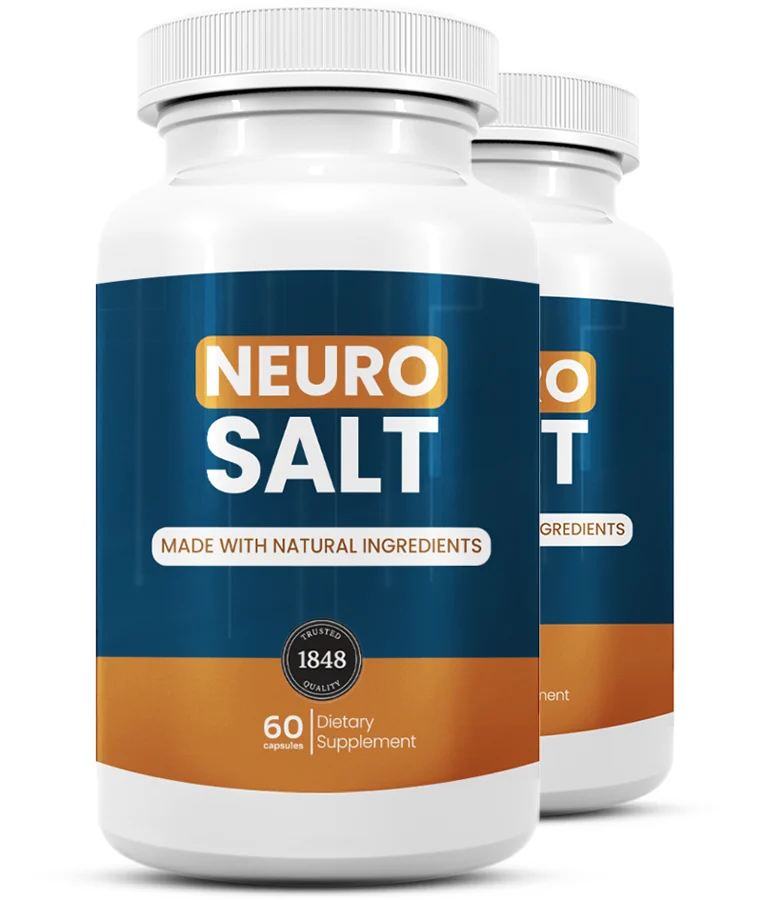
NeuroSalt at a Glance
| Form | Capsules, 60 per bottle; 2 capsules a day with an 8 oz glass of water (FAQ) |
| Core ingredients | 5 botanicals: passionflower, marshmallow root, corydalis, prickly pear extract, California poppy seed (no doses listed) |
| Made in | USA, in an FDA-registered facility (according to the brand's FAQ) |
| Guarantee | 60 days advertised; conditions differ between pages, so confirm with support |
| Shipping (US) | $9.99 on 2 bottles; free on 3- and 6-bottle bundles |
| Main caution | Several herbs can cause drowsiness; corydalis has liver-injury reports. Check with a doctor if you take medicines |
Burning feet at night, pins and needles in the toes, hands that feel numb when you wake up: these are among the most frustrating symptoms people describe, partly because they are hard to explain and often hard to treat. In the US, the most common cause is peripheral neuropathy, damage to the nerves outside the brain and spinal cord, which very often comes with diabetes but also has many other causes.
NeuroSalt is a supplement marketed to that audience. Despite the name, it is not a memory or brain product and, based on the official pages, not a salt either: it is a capsule built around five botanicals that the brand presents as support for nerve comfort, relaxation and sleep. Below we look at what the formula contains, how much of the marketing holds up, what each herb has and has not been shown to do, who should be careful, and how the bundles and refund terms work.
→ See the full NeuroSalt formula on the official website
What Is NeuroSalt?
NeuroSalt is a dietary supplement sold online in bottles of 60 capsules. The brand's FAQ recommends two capsules a day with an 8-ounce glass of water, so each bottle is presented as a 30-day supply. It is aimed at adults bothered by tingling, numbness, burning or aching in the feet and hands who want a plant-based option alongside their usual care.
According to the official FAQ, NeuroSalt is produced in the United States in an FDA-registered facility, uses naturally derived ingredients and contains no artificial stimulants. The FAQ also recommends showing the label to your doctor before starting, which is good advice that this review repeats several times.
Two clarifications are worth making early. First, "FDA-registered facility" describes where a product is made; it does not mean the FDA has reviewed or approved the supplement, because the FDA does not approve dietary supplements before they are sold. Second, the site carries the usual notice that its statements have not been evaluated by the FDA and that the product is not intended to diagnose, treat, cure or prevent any disease.
What About the "Salt" in the Name?
Online articles about NeuroSalt often connect it to a viral "pink salt trick". The official pages we checked describe a herbal capsule and name five plant ingredients; they do not present salt as an active ingredient. If you came looking for a salt-based remedy, this is a different kind of product. It is also worth knowing that people with diabetes, kidney disease or high blood pressure are often advised to watch their sodium, so any "salt trick" for nerve pain deserves a conversation with a doctor before you try it.
How NeuroSalt Is Said to Work: The Claims vs. the Evidence
The brand describes three lines of action. Prickly pear extract is presented as the antioxidant that protects nerve cells from oxidative stress. Marshmallow root and corydalis are described as the ingredients that calm inflammation and quiet pain signals. Passionflower and California poppy are positioned as relaxing herbs that help with sleep, which the brand ties to the cycle of pain, poor rest and more pain.
Part of that reasoning is sensible. Poor sleep and stress really do make pain feel worse, and calming herbs have a long traditional use for both. But the main sales page goes much further, with phrases about eliminating nerve pain, restoring complete mobility and regenerating nerves. Those outcomes are not supported by published human trials of these five herbs, and there is no clinical study of NeuroSalt itself. The fairest summary is that NeuroSalt may offer a mild calming effect for some people; it should not be expected to repair damaged nerves.
First, Find the Cause of Your Nerve Symptoms
Tingling and numbness are symptoms, not a diagnosis. The National Institute of Neurological Disorders and Stroke lists many possible causes of peripheral neuropathy, and several of them are treatable once they are found:
- diabetes and prediabetes, the most common cause in the US
- vitamin B12 deficiency, which is more common with age and with long-term use of metformin or acid-reducing medicines
- an underactive thyroid
- heavy alcohol use
- kidney disease, some infections and autoimmune conditions
- certain medicines, including some chemotherapy drugs
- pressure on a nerve, such as carpal tunnel syndrome or a problem in the spine
A simple set of blood tests can rule several of these in or out. That matters more than any supplement choice: correcting a B12 deficiency or bringing blood sugar under control addresses the cause, while a herbal blend at best eases how symptoms feel.
NeuroSalt Ingredients and What the Research Says
The official pages name five ingredients but do not publish the amount of each one. That is common in this category, but it means we cannot compare the capsules with the doses used in research.
1. Passionflower
Passionflower (Passiflora incarnata) is a traditional herb for anxiety and sleep. NCCIH notes that there is not enough research to draw firm conclusions, although a few small studies suggest it may ease anxiety. It has not been studied as a treatment for neuropathy. It can cause drowsiness, dizziness and confusion, may add to the effect of sedatives, and is not recommended in pregnancy.
2. Marshmallow Root
Marshmallow root (Althaea officinalis) is rich in mucilage, a gel-like fiber traditionally used to soothe a sore throat or an irritated stomach. There is no meaningful human evidence for an effect on nerves. Because mucilage coats the digestive tract, it may slow the absorption of medicines taken at the same time, so spacing it a couple of hours away from other pills is a common precaution.
3. Corydalis
Corydalis (Corydalis yanhusuo) has a long history in traditional Chinese medicine for pain. Its alkaloids, especially tetrahydropalmatine, have shown pain-relieving and sedative effects in animal studies, but good human trials for nerve pain are lacking. It is also the ingredient that calls for the most caution: the NIH's LiverTox database describes cases of liver injury linked to products containing tetrahydropalmatine, and the alkaloid can cause marked sleepiness. It may interact with sedatives, blood thinners and other medicines.
4. Prickly Pear Extract
Prickly pear (Opuntia) is a cactus fruit rich in antioxidants. Small studies have looked at blood sugar and hangover symptoms with mixed results, and there is little direct research on nerve health. Because it may lower blood sugar, people taking insulin or other diabetes medicines should ask their doctor first and watch for low readings.
5. California Poppy Seed
California poppy (Eschscholzia californica) is a calming herb traditionally used for restlessness and sleep. Human evidence is limited and comes mostly from small studies of combination products. It may add to the effects of alcohol, sleep aids and other sedatives, and it is not recommended during pregnancy or breastfeeding.
Prefer a plant-based capsule and already cleared it with your doctor? Check NeuroSalt's current bundles on the official site.
Visit the Official NeuroSalt Website →NeuroSalt vs. Other Nerve Support Supplements
If you are comparing options, it helps to know which ingredients have the most research behind them. Alpha-lipoic acid is the best studied: the SYDNEY 2 trial found that 600 mg a day improved symptoms of diabetic neuropathy over five weeks compared with placebo, although results across studies vary. Vitamin B12 is essential when a deficiency is present, and benfotiamine, a form of vitamin B1, has been studied in diabetic neuropathy with mixed results.
NeuroSalt takes a different route: none of those ingredients are listed, and its herbs act mainly as calming agents. That may suit someone whose main complaint is that discomfort keeps them awake, but it is a weaker evidence base than ingredient-specific formulas. Whatever you choose, the American Diabetes Association's guidance is that blood sugar control and prescription options, when needed, are the backbone of neuropathy care.
Pros and Cons of NeuroSalt
Pros
- Simple routine of two capsules a day
- Five named botanicals with no artificial stimulants, according to the brand
- Made in the USA in an FDA-registered facility, according to the FAQ
- Calming herbs may help some people with sleep disturbed by discomfort
- One-time purchase; larger bundles lower the price per bottle and ship free
Cons
- Doses of the ingredients are not published
- No clinical study of the product; human evidence for the herbs is limited
- Several ingredients can cause drowsiness or interact with medicines
- Corydalis has been linked to rare cases of liver injury
- Refund conditions differ between the brand's own pages
- Bundle offers vary between the main page and the order page
Who Might Consider NeuroSalt, and Who Should Not
NeuroSalt is aimed at adults who:
- have already seen a doctor about their nerve symptoms and know the likely cause
- prefer to try a botanical product alongside the care they already receive
- are mainly bothered by discomfort that affects relaxation and sleep
- are comfortable with modest expectations and a trial period
Talk to a healthcare professional first, or skip it, if any of these apply:
- new, worsening or one-sided numbness, weakness, or a foot wound that is slow to heal
- diabetes, liver disease or kidney disease
- you take blood thinners, diabetes medicines, blood pressure medicines, sleep aids, anti-anxiety medicines or prescription drugs for nerve pain such as gabapentin, pregabalin or duloxetine
- you are pregnant, breastfeeding or under 18
- you drink alcohol regularly or need to stay alert for driving or work
Safety and Side Effects
No serious side effects have been publicly reported for NeuroSalt as a finished product, but the profile of its ingredients points to a few predictable issues. The most likely are drowsiness, dizziness and mild stomach upset, because three of the five herbs have sedative effects. Combining it with alcohol, sleep medicines or prescription nerve-pain drugs that also cause drowsiness can add up.
The rarer but more serious concern is the liver. Stop taking NeuroSalt and contact a doctor promptly if you notice yellowing of the skin or eyes, dark urine, pale stools, unusual tiredness or pain in the upper right side of the abdomen. People with diabetes should also check their blood sugar more often during the first weeks, because prickly pear may lower it.
Finally, do not stop or reduce any prescribed medicine to make room for a supplement. Neuropathy treatments are often adjusted gradually for good reason.
How to Use NeuroSalt
The FAQ advises two capsules a day with an 8-ounce glass of water. Because of the calming herbs, many people may prefer to take it in the evening, but see how your body responds before driving or using machinery. The brand promotes longer use and its biggest bundles, but there is no evidence-based timeline for results. A practical approach is to keep a short daily note of symptom intensity and sleep quality for four to eight weeks, then decide with your doctor whether it is worth continuing, well inside the 60-day window.
NeuroSalt Price, Shipping and Guarantee
On the official order page we checked, NeuroSalt was sold in three bundles, with the price per bottle falling as the bundle grows:
| Bundle | What the official order page states |
|---|---|
| 2 bottles (60-day supply) | $79 per bottle, $158 total, plus $9.99 shipping |
| 3 bottles (90-day supply) | $69 per bottle, $207 total, free US shipping |
| 6 bottles (180-day supply) | $49 per bottle, $294 total, free US shipping |
| Bonuses | Digital guides with larger orders, per the main page |
| Billing | One-time payment, no subscription (FAQ) |
| Guarantee | 60 days, conditions vary by page (see below) |
The brand's main page showed a different set of offers when we checked, including a four-bottle and an eight-bottle pack. Prices on these pages change, so confirm the total at checkout before you pay.
→ Check today's NeuroSalt price and bundles on the official website
Refund Policy: What the Terms Actually Say
Every page advertises a 60-day money-back guarantee, but the details are not consistent. The main sales page says you can return all bottles, full or empty, within 60 days for a full refund. The refund section in the FAQ is stricter: it mentions a minimum 30-day trial, accepts sealed bottles only, applies a 20% restocking fee, does not refund shipping or customs charges and asks the customer to pay return shipping. The returns page linked from the order page says opened bottles are accepted and that return postage is the customer's cost.
Because of these differences, email support before you order and ask them to confirm in writing which terms apply to your purchase. Keep your order confirmation, tracking number and delivery date, and request any refund well before day 60.
What We Saw on the Official NeuroSalt Order Page (October 12, 2026)
On October 12, 2026 we opened the official order page ourselves and followed the checkout up to the payment step, without placing an order, to record exactly what a buyer sees. The screenshots below are unedited crops from that visit.
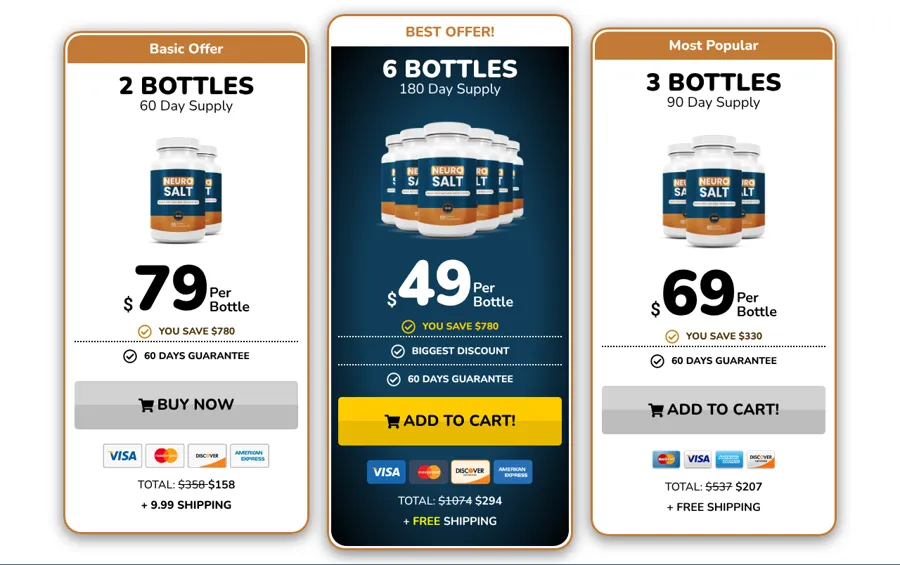
- The order page offered 2 bottles at $79, 3 bottles at $69 and 6 bottles at $49 per bottle.
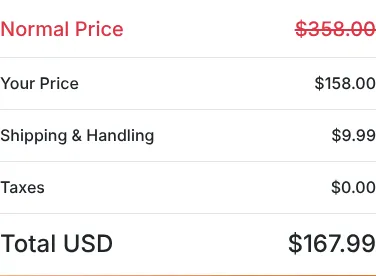
- The 2-bottle checkout showed $158.00 plus $9.99 shipping and handling, $167.99 total. The 3-bottle ($207.00) and 6-bottle ($294.00) checkouts had $0.00 shipping.
- The linked customer-service pages are not consistent: the returns page counts the 60 days from the day the order was placed, while the terms page says to contact support within 60 days of delivery and return the bottles, even empty ones. To be safe, count from your order date. Contact address listed: contact@customercs.com.
Where to Buy NeuroSalt
NeuroSalt is sold through its official website and order page. Copies on marketplaces or unknown stores may be old, stored badly or imitations, and they are unlikely to be covered by the guarantee. If you decide to buy, the official order page is the safest route to the genuine product and the refund policy.
Final Verdict
NeuroSalt is a five-herb capsule marketed for nerve comfort. Its strengths are practical: an easy two-capsule routine, US manufacturing in an FDA-registered facility according to the brand, and a 60-day refund window. Its calming herbs may help some people relax and sleep when discomfort keeps them up.
The weak points are the missing doses, the thin human research behind the herbs, a sales page that promises far more than the evidence allows, and refund terms that differ across the brand's own pages. Corydalis also deserves real caution. If nerve symptoms are bothering you, the most useful step is a medical check to find the cause. If you and your doctor then agree a herbal add-on is reasonable, NeuroSalt can be tried as exactly that, with modest expectations: supplements can support comfort; they do not cure neuropathy.
Frequently Asked Questions (FAQs)
Is NeuroSalt a memory or brain supplement?
No. Despite the name, NeuroSalt is marketed for peripheral nerve comfort, aimed at people bothered by tingling, numbness or burning in the feet and hands. It is not a memory or cognitive product.
What are the ingredients in NeuroSalt?
The official pages name five botanicals: passionflower, marshmallow root, corydalis, prickly pear extract and California poppy seed. The amount of each is not stated.
Can NeuroSalt cure neuropathy?
No. No supplement has been shown to cure neuropathy or regenerate nerves, and the brand's own disclaimer says it is not intended to treat or cure any disease. See a doctor to find the cause of your symptoms.
Can I take NeuroSalt with gabapentin, pregabalin or diabetes medicine?
Ask your doctor or pharmacist first. Several of its herbs are sedating and may add to the drowsiness these drugs cause, and prickly pear may lower blood sugar.
How do you take NeuroSalt?
The FAQ suggests two capsules a day with an 8-ounce glass of water. Each bottle holds 60 capsules, about a 30-day supply.
How much does NeuroSalt cost?
On the official order page, 2 bottles are $158 plus $9.99 shipping, 3 bottles are $207 and 6 bottles are $294, with free US shipping on the larger bundles. Confirm the price at checkout.
What is the NeuroSalt refund policy?
A 60-day money-back guarantee is advertised, but the brand's pages describe different conditions, including one version with sealed bottles only and a 20% restocking fee. Confirm the terms with support in writing before ordering.
Want to compare the current bundles? The official order page shows today's prices.
Visit the Official NeuroSalt Website →References
- National Institute of Neurological Disorders and Stroke (NINDS). Peripheral Neuropathy.
- Pop-Busui R, et al. Diabetic Neuropathy: A Position Statement by the American Diabetes Association. Diabetes Care. 2017;40(1):136-154.
- Ziegler D, et al. Oral treatment with alpha-lipoic acid improves symptomatic diabetic polyneuropathy: the SYDNEY 2 trial. Diabetes Care. 2006;29(11):2365-2370.
- NIH Office of Dietary Supplements. Vitamin B12 — Fact Sheet for Health Professionals.
- National Center for Complementary and Integrative Health (NCCIH). Passionflower.
- LiverTox: Clinical and Research Information on Drug-Induced Liver Injury. National Institute of Diabetes and Digestive and Kidney Diseases. Jin Bu Huan (tetrahydropalmatine).
- U.S. Food and Drug Administration. Questions and Answers on Dietary Supplements.
This review is for general information only and is not medical advice. Product details (ingredients, prices, guarantee) come from the official NeuroSalt pages as checked in October 2026; they can change, so confirm them at checkout. Talk to your doctor before starting any supplement, especially if you take prescription medication or have a health condition.